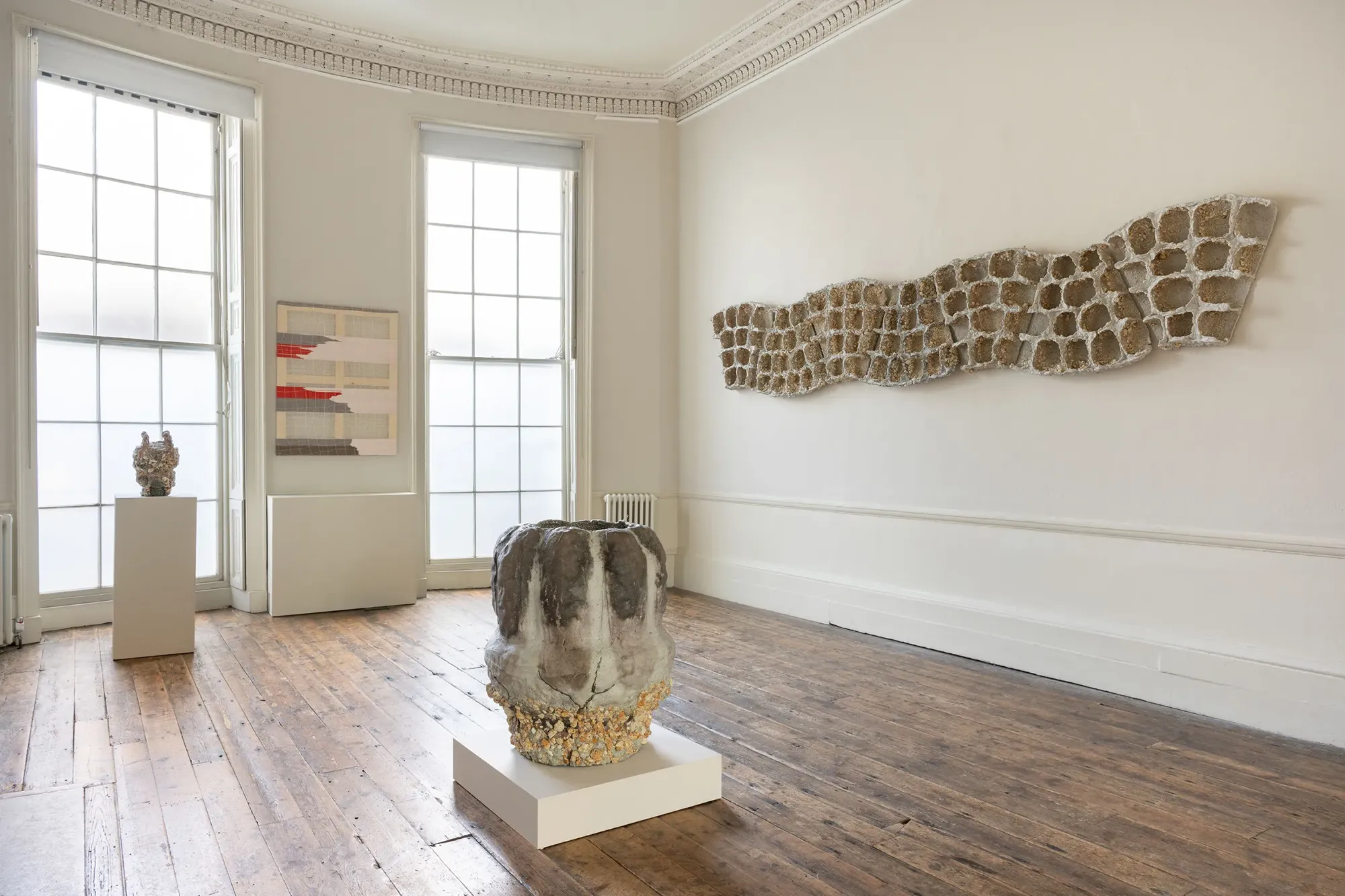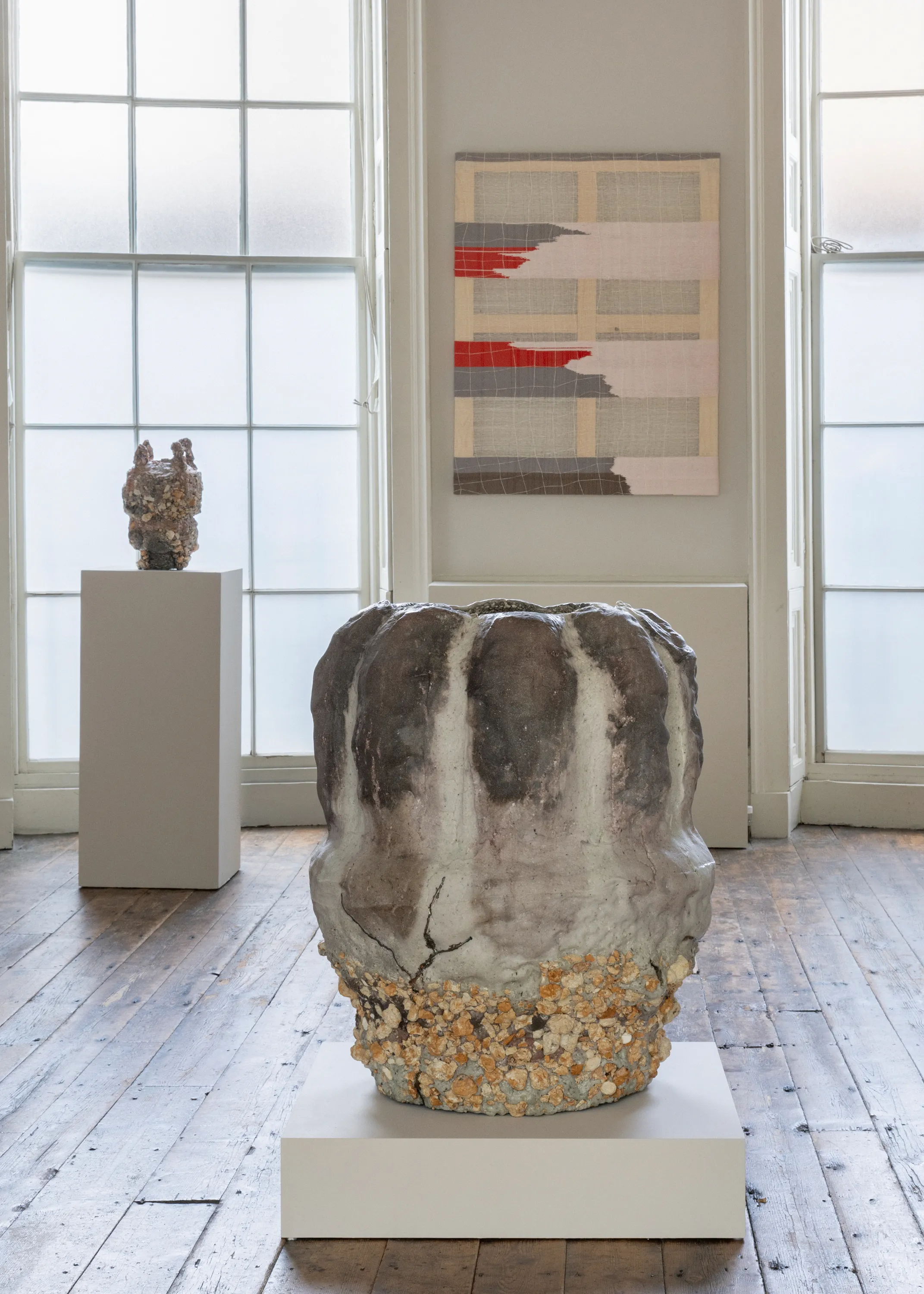
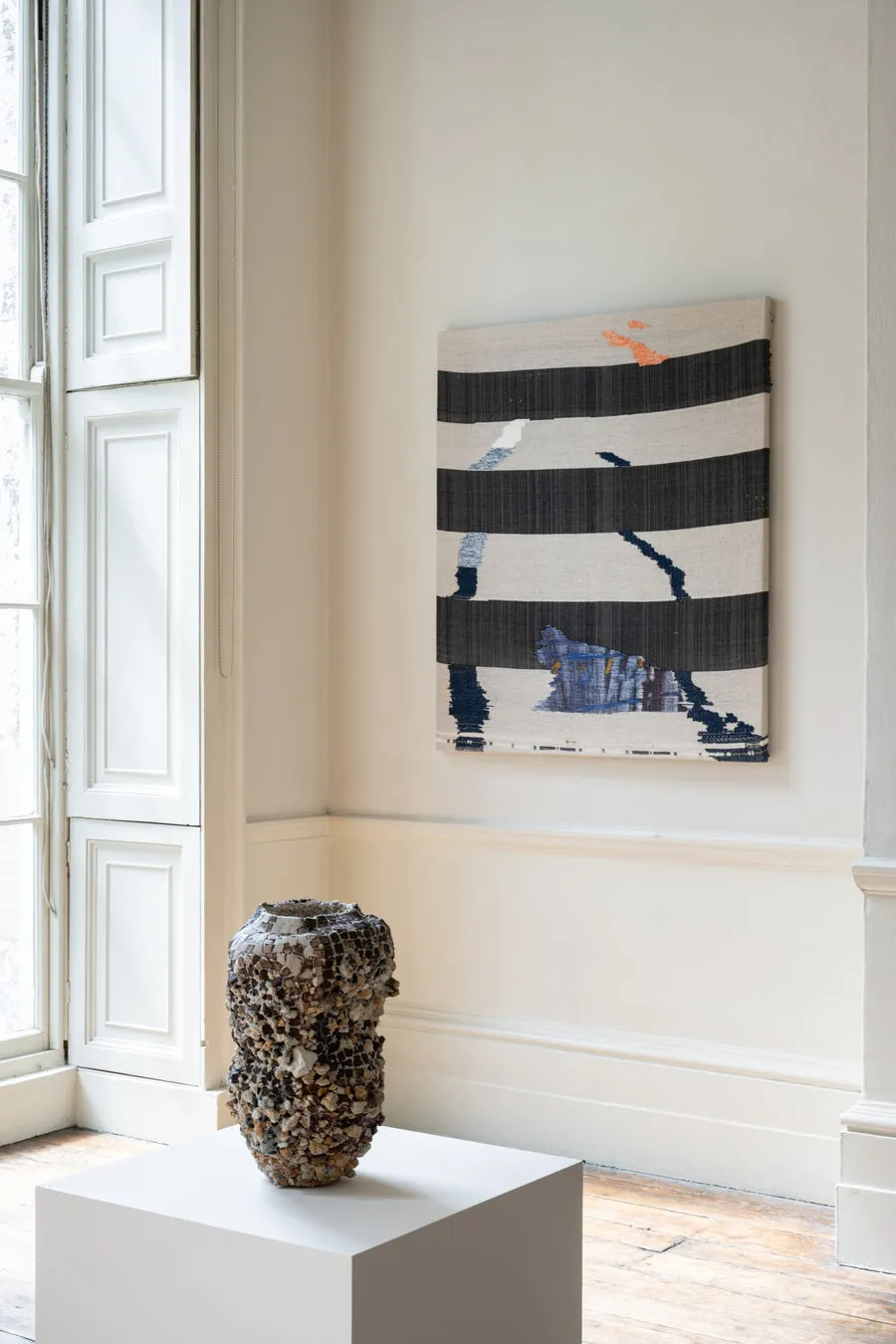
Marie Hazard & Masaomi Yasunaga's dual presentation at London's Tristan Hoare Gallery curated by Sonya Tamaddon brought together woven works by French artist Marie Hazard and ceramic sculptures by Japanese artist Masaomi Yasunaga in a shared investigation of material transformation, ritual, and reinvention of historic traditions. Installed throughout the gallery's historic Georgian townhouse in Fitzroy Square, the exhibition considered how weaving and ceramics embody notions of being enmeshed, finding connections, coming apart, and disclosing multiple incarnations, textures, and densities.
Founded in 2009, Tristan Hoare has developed a multi-layered program spanning contemporary and historical practices across ceramics, textile, painting, photography, and sculpture. Within the intimate domestic architecture of the townhouse, Hazard and Yasunaga's works unfolded in dialogue as meditations on time, materiality, and the instability of form. Both artists engage in radical acts to bring their artworks to life, stripping their mediums of centuries-long ties to function. Drawing upon Manny Farber's notion of the "termite artist," their practices privilege process, accumulation, experimentation, and chance over monumentality or refinement. Across weaving and ceramics alike, ordinary materials are stretched, buried, patched, dismantled, and reassembled into textured visual puzzles that allow for continual re-becoming.
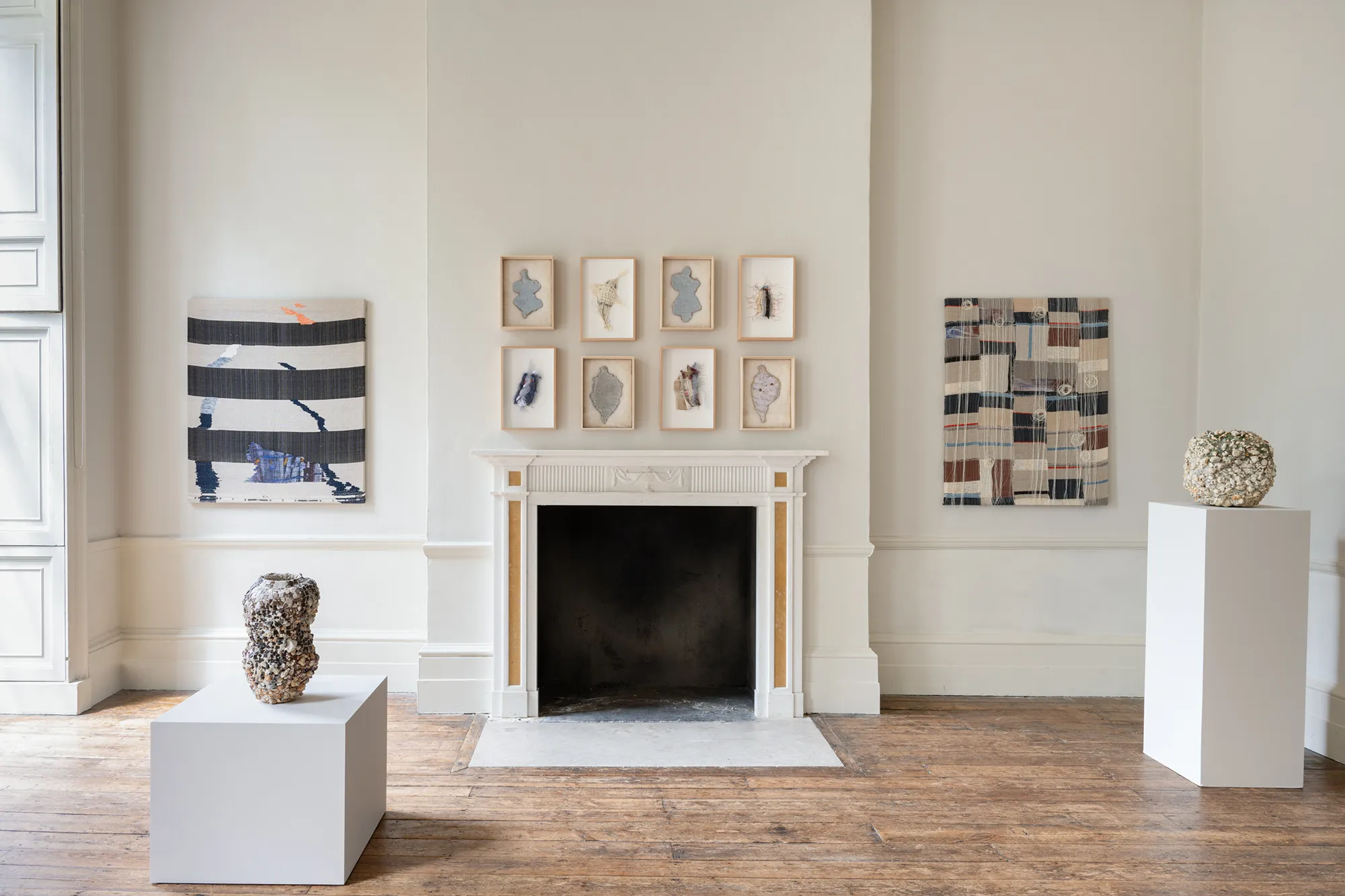
Osaka-born Yasunaga presents sculptural forms that challenge conventional definitions of ceramic practice. Trained under Satoru Hoshino and influenced by the postwar experimental ceramics movement Sodeisha, Yasunaga employs glaze as his primary material rather than clay, allowing fire itself to become a sculpting tool. His fragile constructions are buried beneath layers of sand and kaolin during firing, where they collapse, fuse, and harden through a process shaped equally by control and fortuity. Incorporating found stones, mosaic tiles, feldspar, glass, and metal powders collected near his studio in Iga-shi, the resulting objects possess an excavated, archaeological quality while reflecting the artist's ongoing interest in returning artificial objects to nature.
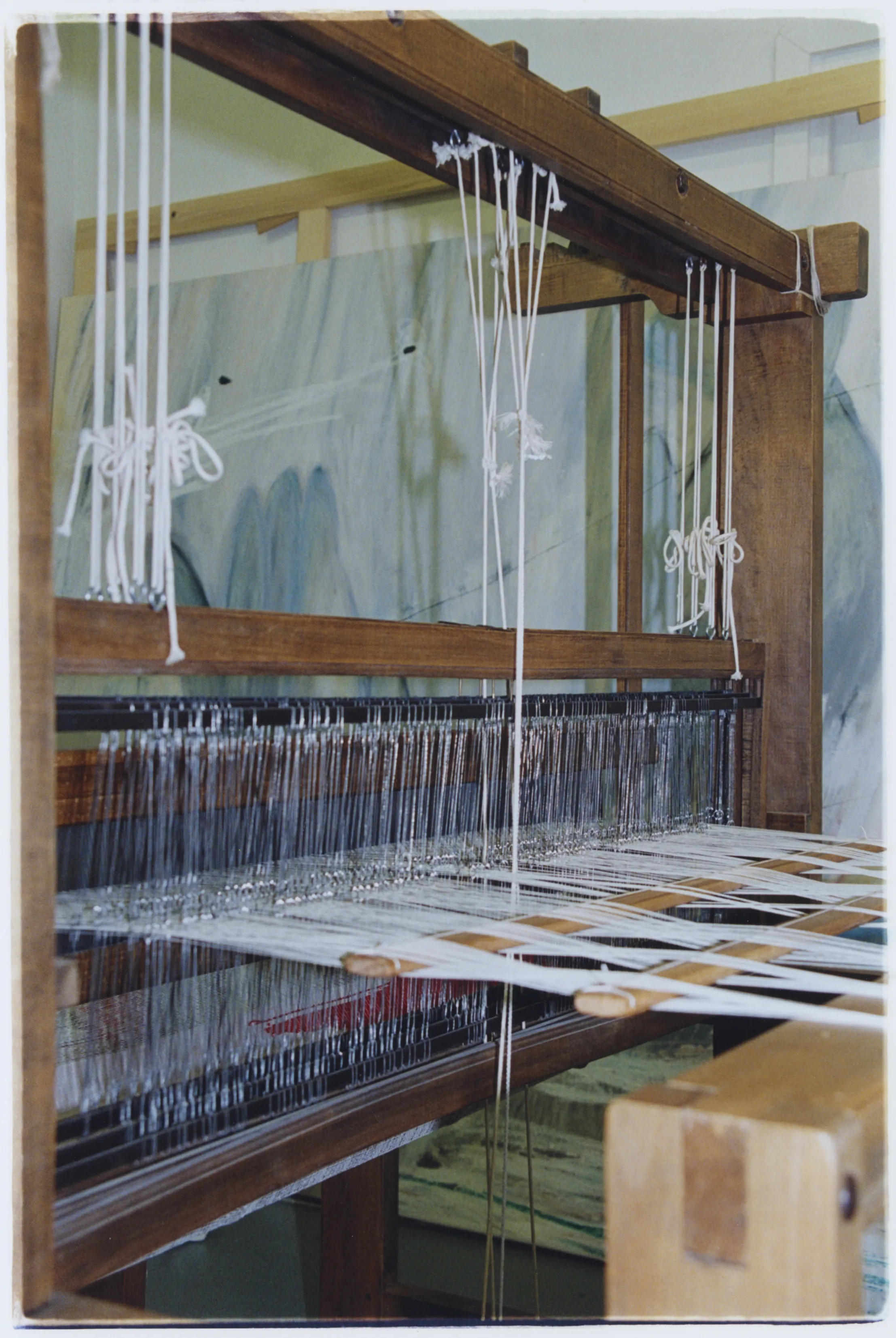
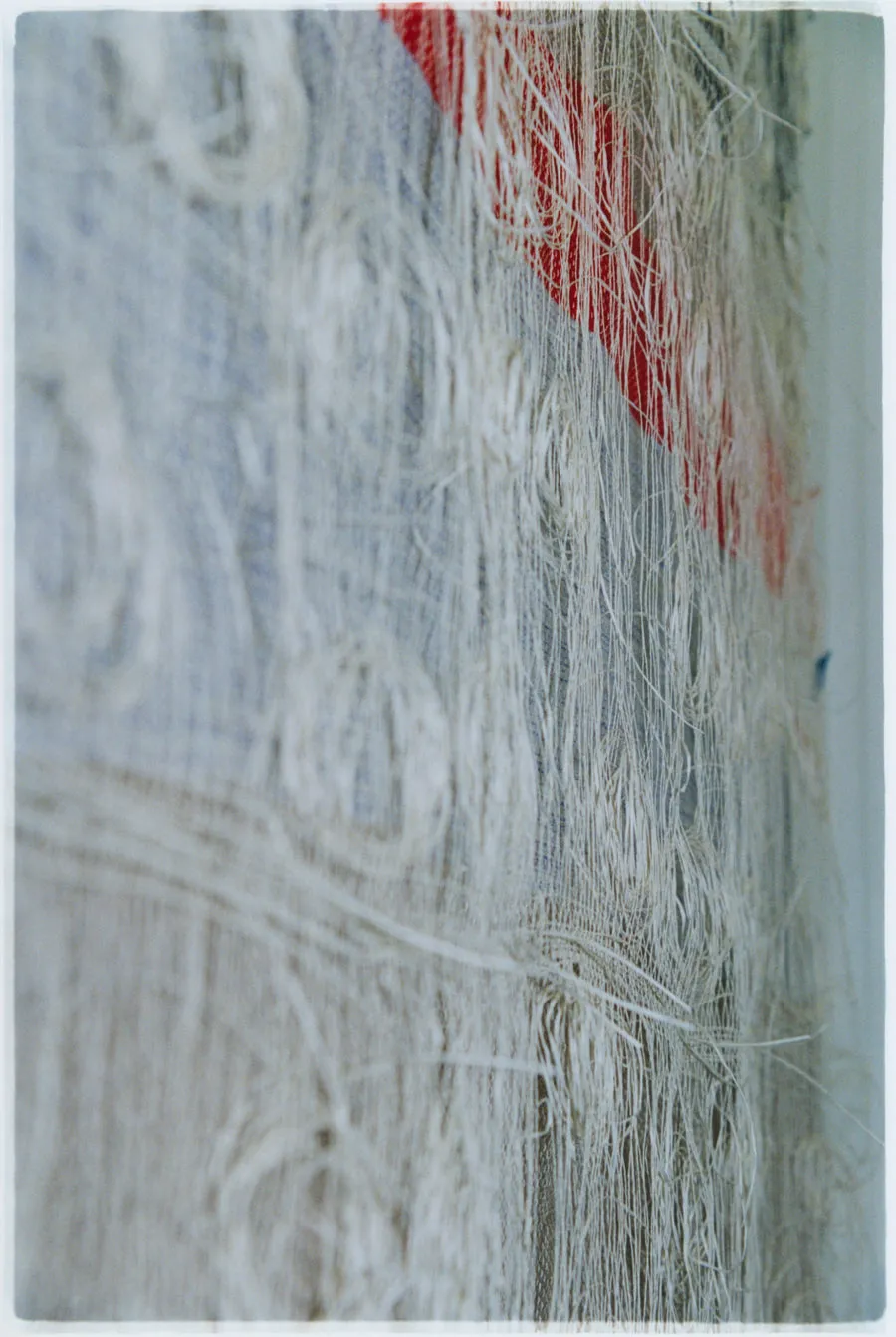
The choreography of Hazard's process, each weaving beginning with a pastel sketch, image or painting as part of her process prior to beginning on the loom, culminates in the artist's largest weaving installation to date, a summary of the grid, accidents welcome and embraced, elements introduced and removed. A meditation in discourse with Yasunaga's 'Empty Creatures' series on view are Hazard's 16 small-format weaves born out the Japanese artist's interest in Utsuwa, translating as "vessel." Utsuwa is a term employed by Yasunaga in reference to his work to describe containers that hold multitudes: the body as a container of the soul, an insect, a shell, symbols and iconographies born out of the shared desire to cherish.
Together in their processes and provocations which transfigure ordinary materials into textured visual puzzles, Hazard and Yasunaga challenge the linear nature of time and allow for a ceaseless re-becoming. Their visual dialogue is complemented with an in-conversation event between Hazard, the exhibition's curator Sonya Tamaddon and independent curator Bianca A. Manu, associated with the Serpentine Galleries and the Wallace collection.